


Setting Goals
The Power of Purposeful Goals
A Common Cycle As a young athlete, I remember the cycle all too well. I’d start a season strong—center field, leadoff hitter, full of potential. Then a slump would hit, my confidence would slip, and before long I’d be batting ninth, eventually landing on the bench. No matter how hard I worked, I couldn’t break free from this pattern. My goals were tied to external markers—my place in the lineup, my batting average—rather than the vision I had for my future. Then, a new coach looked me in the eye and said, “I know who you are and what you’re capable of, and nothing you do will change that.” Suddenly, everything shifted. I played without fear, focused on the kind of athlete I wanted to become rather than the immediate outcomes. In that moment, I realized true goal-setting isn’t about where you stand now, but where you’re going—effort-based goals that guide growth and shape the person you need to be.
Diminished Confidence
Unfortunately, many student-athletes and their parents lack effective goal-setting tools, leading to frustration, diminished confidence, and a fixation on short-term results. It’s time to move from chasing quick wins to embracing a vision-driven approach that emphasizes input over output.
Too Late, Just in Time
It wasn’t until after I was done with sports that I learned the following lessons:
From Carol Dweck’s Mindset: I learned to embrace a growth mindset. Instead of labeling myself by my current abilities, I started to see each challenge as an opportunity toward developing new strengths aligned with your vision.
Ryan Holiday’s The Obstacle Is the Way: Showed me how real growth isn’t found by avoiding hardship; it comes from engaging with challenges. Obstacles aren’t barriers—they’re opportunities that force us to evolve.
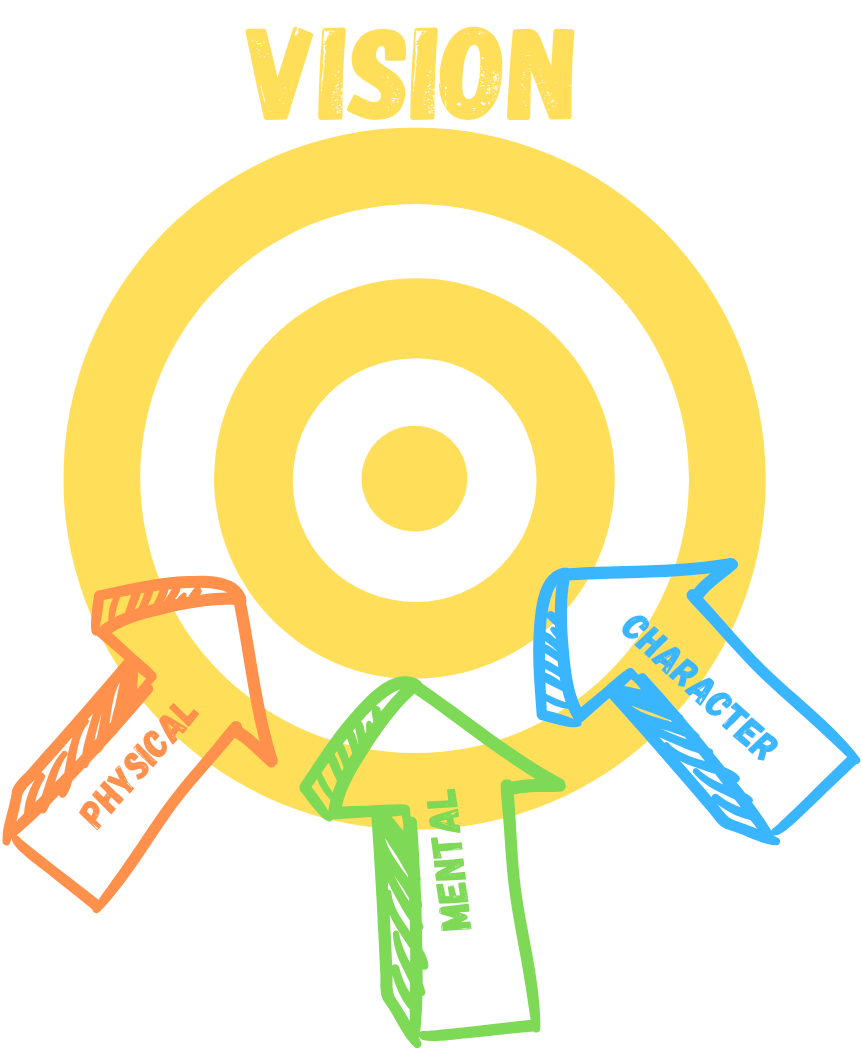
James Clear’s Atomic Habits: Small, consistent changes compound over time. Instead of treating goals as endpoints, let them be arrows pointing toward your vision. Each 1% improvement builds the confidence and capability you need to handle bigger challenges.
Evolve If you think success is hitting every target right now, ask yourself: what happens when you miss? By anchoring goals to your vision, setbacks become stepping stones. Instead of seeing failure as proof you’re not good enough, recognize it as evidence that you’re evolving toward something greater.
Aim Your Goals at Your Vision Your goals should serve your long-term vision, not just measure where you are today. Define who you want to become, then create goals that help you grow into that person. Using the Pyramid of Proficiency, start by forming a clear vision. Identify the character traits you need to develop, the knowledge gaps to fill, and the skills to refine. For example, if you want to make varsity soccer, don’t just chase stats—focus on resilience, understanding the game’s strategies, and developing a key skill that closes any gap.
Ready to build meaningful, vision-based goals? Access our Goal-Setting Course, Workbook, and Parent Guide today, and work together to create lasting growth that transcends short-term outcomes.
Created with ©systeme.io